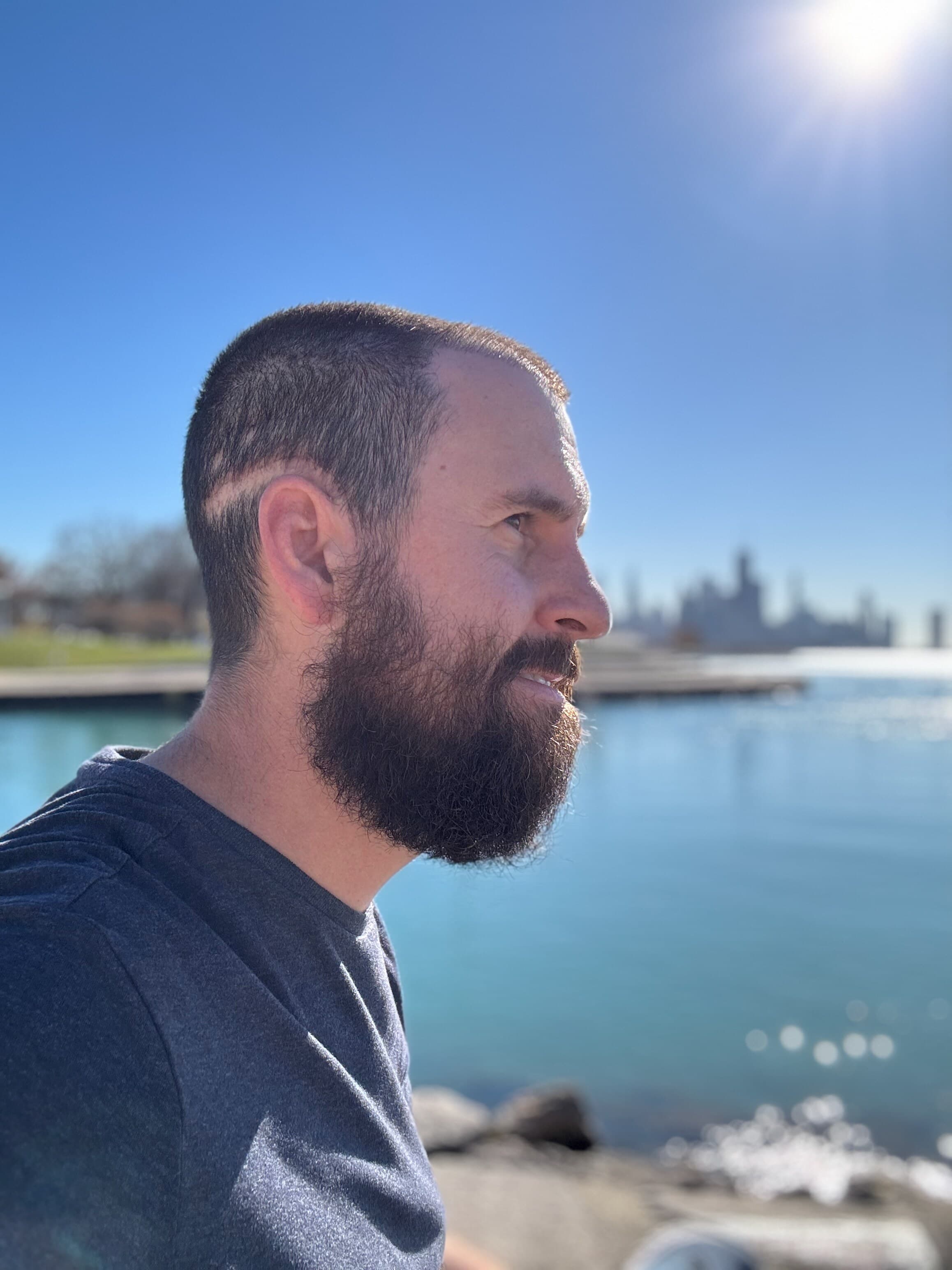
I can’t hide anymore
Written in the weeks after an emergency craniotomy — my third brain surgery in two weeks — during speech therapy. It took three days. Published as written.It wasn’t until 2019 that I was properly diagnosed with epilepsy, but my journey began well before that. I’ve experienced the tight grip of epilepsy my entire adult life.
In 2013, I needed answers. I went to around 50 doctors’ appointments that year, but no one could figure out what was causing these “dizzy spells” to happen. I didn’t know how else to explain them and I never considered the idea that they could be seizures. Everything I knew about seizures and epilepsy involved flashing lights and convulsions. I didn’t lose consciousness or convulse, I’d just become dizzy and have verbal issues. It was first diagnosed as vertigo and then migraines. The “dizzy spells” persisted through various types of medication, therapies, and diets. Nothing seemed to help. They also progressively got worse.
In 2019, I experienced my first tonic clonic seizure, at work no less. I woke up from that seizure in an ambulance. I later found out that I was actually conscious well before that, but completely incoherent. I tried refusing getting into the wheelchair when the paramedics arrived, I kept saying “I can walk, I’m fine!” I had no memory or recollection of that, but I knew myself well enough to know why I’d say that.
I was afraid of how others would see me, I always had been. I had hidden this from them for over 10 years already. I didn’t want to be seen as a liability or even worse, as incapable. I had high expectations for myself and ambitious career goals. For so long I pushed myself harder when I was around them, pretending nothing was wrong, like I had something to prove. I would hide in bathroom stalls, conference rooms, and staircases anytime I felt a “dizzy spell” coming on. That strategy finally caught up to me that day. I pushed myself too far.
After that seizure in 2019, my journey started over. It was a blessing in disguise. The doctors’ visits, tests, and scans started again and this time they quickly discovered what was happening, an arterial malformation and cortical dysplasia in my left temporal lobe, the area that controls speech, reading, writing, and memory. Everything started to make sense. I remember crying on my way home from learning those results. Not in sadness or disappointment, I was just happy to finally have some answers. I had hope again that the seizures would stop with the right treatment.
Upon returning to work soon after, I opened up to close friends and colleagues about what had happened. They were incredibly supportive. They were kind and accommodating. I was finally able to acknowledge my disability for the first time and know that it was accepted. I learned that pushing myself beyond limits was unnecessary and harmful. I didn’t need to prove that I was capable, the work already spoke for itself.
In subsequent years, I was put on a number of different medications which helped. Unfortunately no combination stopped the frequency of near daily seizures, only the severity. The daily challenges have now become different. Instead of “dizzy spells,” they now present themselves as aphasia. It’s an odd feeling, like being trapped in your own mind. It’s also created a new fear and anxiety to make matters worse. The outgoing and inviting version of myself has become more quiet and reserved, afraid of the impression others may have when mispronouncing words, mixing words, or even going blank at times. It has made me want to hide again, but I haven’t given up hope.
Recently I went in for my third and final week long stay in the Epilepsy Monitoring Unit, hoping to become a candidate for epilepsy surgery. Unlike the first two visits, this time involved invasive EEGs within the depths of my brain. The procedure was successful and the epilepsy team got all of the data that was needed. I was happy and eager to learn the results in upcoming weeks. Unfortunately that joy was short lived.
Upon returning home, I fell into a 4 hour long seizure and was rushed to the ER. After extensive testing, the doctors were uncertain as to what was happening. I was incapacitated and my left temporal lobe was completely swollen. They performed an emergency craniotomy the next day and found what was later determined to be a brain infection. Thanks to the quick action of my soon to be wife and family, I survived. The outcome could have been way different, but thanks to open conversation with them about my epilepsy, they knew exactly what to do when I didn’t and when I couldn’t.
I was kept at the hospital for another week unable to speak, read, or write. It was followed by weeks of intravenous antibiotics at home. I’ve since been recovering physically, mentally, and cognitively with a positive outlook.
The experience has given me a different perspective on my epilepsy and that’s why I felt compelled to share this with you.
I don’t want to hide anymore. I can’t hide anymore. The scar won’t let me, and I’m alright with that.